K-12 leaders must now regularly navigate swatting calls and bomb threats.
Swatting is the malicious tactic of making hoax calls or reports to emergency services, typically feigning an immediate threat to life. Swatting is intended to draw a large response from SWAT teams or other law enforcement resources to an unsuspecting victim’s location, causing chaos and the potential for injury or violence. Targets of swatting often include high-profile public figures, as well as schools, hospitals, places of worship, and centers of mass transportation, but anyone can be a victim. A swatting incident may be an isolated event targeting one victim or part of a larger coordinated effort to target multiple victims. (FBI)
Whether the bomb threat is made via phone, handwritten note, email, social media, or other means, K-12 leaders navigating the threat need tools to lead students, staff, and community through the process.

U.S. Department of Homeland Security – Throughout the country, schools, hospitals, businesses, places of worship, nongovernmental organizations, and individuals to include U.S. government officials, journalists, celebrities, online gamers, and many others have increasingly been victims of swatting calls and hoax threats. These incidents cause fear and potentially dangerous interactions with law enforcement. Swatting calls and hoax threats are a daily occurrence, often come in clusters across the U.S., and are typically made to harass, intimidate, and/or retaliate against their intended target.
U.S. Department of Homeland Security – The “Anonymized Threat Response Guidance: A Toolkit for K-12 Schools” can help K-12 schools and law enforcement and community partners create tailored approaches to addressing anonymous threats of violence, including those received on social media.
Cybersecurity & Infrastructure Security Agency – The K-12 Cybersecurity Foundations Resource Package is a comprehensive collection of guides, videos and supplemental materials designed to help kindergarten through grade 12 (K-12) schools and districts prevent, mitigate and respond to prevalent cyber threats. Based on current cybersecurity best practices and frameworks, the resource package outlines cost-effective, actionable and tailorable steps K-12 institutions can take to develop and maintain effective cybersecurity programs.
Learn more
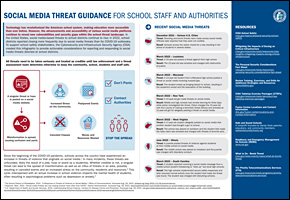
Cybersecurity and Infrastructure Security Agency (CISA) – This product highlights social media threats affecting school districts in the United States, provides mitigation and response measures for social media threats directed at school districts, and connects school safety stakeholders to a suite of tools and resources provided by CISA and its partners to promote a culture of readiness and preparedness.
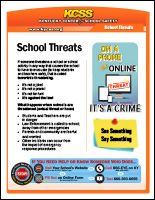
KCSS – If someone threatens a school or school activity in any way that causes the school to have to evacuate (to keep students and teachers safe), that is called terroristic threatening.
National Center for School Safety – On October 24, 2023, the National Center for School Safety hosted a live webinar with staff from the city of Franklin, New Hampshire, and Franklin School District. The discussion focused on the city and school response to a swatting incident they experienced in 2022.
This spotlight, comprised of excerpts from the live discussion, offers valuable insights for those preparing to address potential security issues in their school district.
Learn more
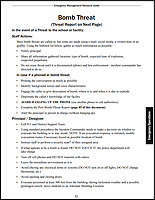
CISA – Quick reference guide that provides K-12 leaders with pre-threat preparation, threat assessment considerations, staff response guidelines, and evacuation and shelter-in-place considerations.
CISA – Demonstrates the procedures you should follow during a bomb threat and will help you prepare and react appropriately.
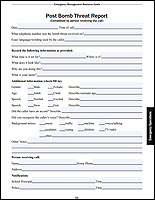
CISA – Whether the bomb threat is made via phone, handwritten note, email, social media, or other means, the Bomb Threat Checklist provides instructions on how to respond to a bomb threat and a comprehensive list of information that will assist law enforcement in a bomb threat investigation.
CISA – This product provides K-12 schools and districts with products, tools, and Counter-Improvised Explosive Device (C-IED) strategies to protect, prevent, mitigate, and respond to bombing threats.
CISA – The Bomb Threat Assessment for Decision Makers Course introduces the participant to types of threats, the threat assessment process, and the implementation of a Bomb Threat Management (BTM) plan. It provides activities for participants to apply specific portions of the risk management process and their newly acquired knowledge about BTM procedures to develop a risk assessment of a bomb threat.
U.S. Department of Homeland Security – The “Anonymized Threat Response Guidance: A Toolkit for K-12 Schools” can help K-12 schools and law enforcement and community partners create tailored approaches to addressing anonymous threats of violence, including those received on social media.
Date Last Reviewed: August 2026